How Often Should You Tune a Piano?
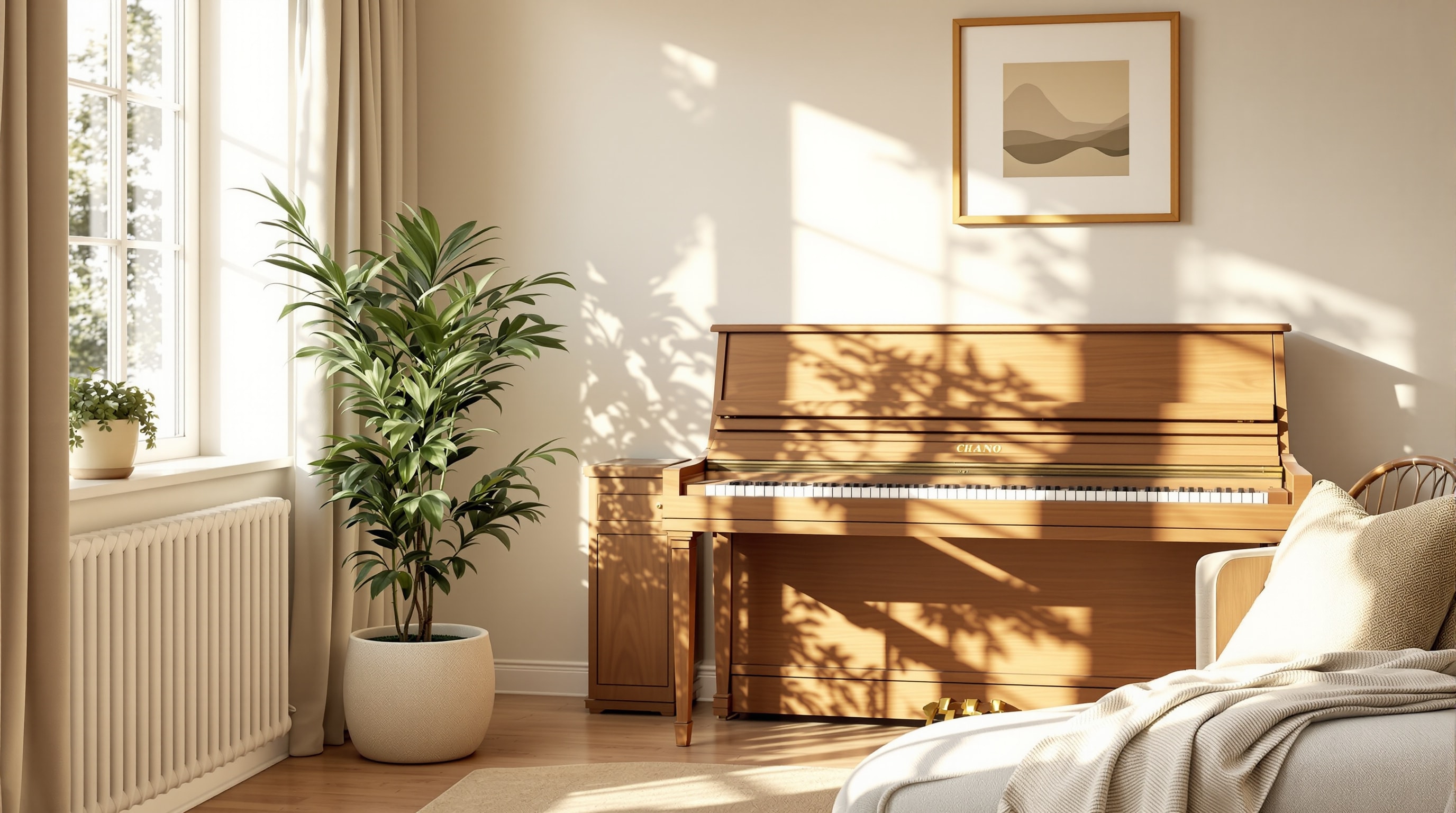
One of the most common questions piano owners ask is simply, "How often does this thing need tuning?" The honest answer is that it depends on the instrument, how it's used, and above all the environment it lives in. But there are well-established guidelines that apply to most pianos, and a few Nashville-specific considerations worth knowing.
The General Rule: Twice a Year
For a piano in a typical home, most manufacturers and technicians — including the Piano Technicians Guild — recommend tuning at least twice a year. A common rhythm is once in spring and once in fall, timed to the changes of season when indoor humidity shifts most dramatically. This cadence keeps the instrument close to concert pitch, which means each tuning is a smaller correction and the piano holds its tune better between visits.
Twice a year is a floor, not a ceiling. Instruments that are played heavily, used for teaching, or asked to perform in public are usually tuned more often. Which brings us to the factors that push the number up or down.
What Increases How Often You Should Tune
Several situations call for more frequent attention:
- Brand-new pianos. A new piano's strings are still stretching and settling. Manufacturers typically recommend three to four tunings in the first year while everything beds in.
- Recently moved pianos. After a move — especially into a home with different humidity than the old one — a piano needs a few weeks to acclimate, then a tuning.
- Heavy use. Practice pianos, teaching studios, and performance instruments take far more hammer strikes and drift faster.
- Unstable environments. Rooms with wide temperature and humidity swings will pull a piano out of tune no matter how well it was set.
New Pianos Need Extra Care
It's worth repeating: the first year or two in the life of a new piano — or a piano newly restrung — is a settling-in period. The high-tension steel strings gradually stretch and the whole structure comes to equilibrium. Skipping tunings during this window lets the pitch sag, and once a piano falls well below A440 it takes a pitch raise (and often a second visit) to recover. A modest schedule of tunings early on protects the investment for decades to come.
The Tennessee Factor: Seasonal Humidity
Middle Tennessee delivers exactly the kind of climate that keeps pianos moving. Summers are warm and humid; winters are cooler, and indoor heating dries the air sharply. Each swing causes the wooden soundboard to expand and contract, changing string tension and therefore pitch.
Because of this, many local owners find that tuning in late spring (after air conditioning stabilizes indoor humidity) and again in late fall (once the heat comes on) tracks the biggest environmental changes. If you can only manage the minimum, timing your two annual tunings to bracket these transitions gives you the most stable result. The most effective long-term fix, though, is to reduce the swings in the first place — see our detailed guide to humidity and your piano.
Signs Your Piano Is Overdue
Beyond the calendar, listen to the instrument. Tell-tale signs that a tuning is overdue include:
- Chords that sound sour, muddy, or "wavery" even when played correctly.
- Notes that clearly clash with a tuner app, another instrument, or a recording.
- A general sense that the piano sounds dull or lifeless compared with how you remember it.
If it has been more than a year — or you've simply lost track — it's worth having a qualified technician assess it. A piano that has drifted far can usually be recovered, and our guide to choosing a technician explains what to look for. For the mechanics behind why all of this happens, revisit how piano tuning works.