The Parts of a Piano
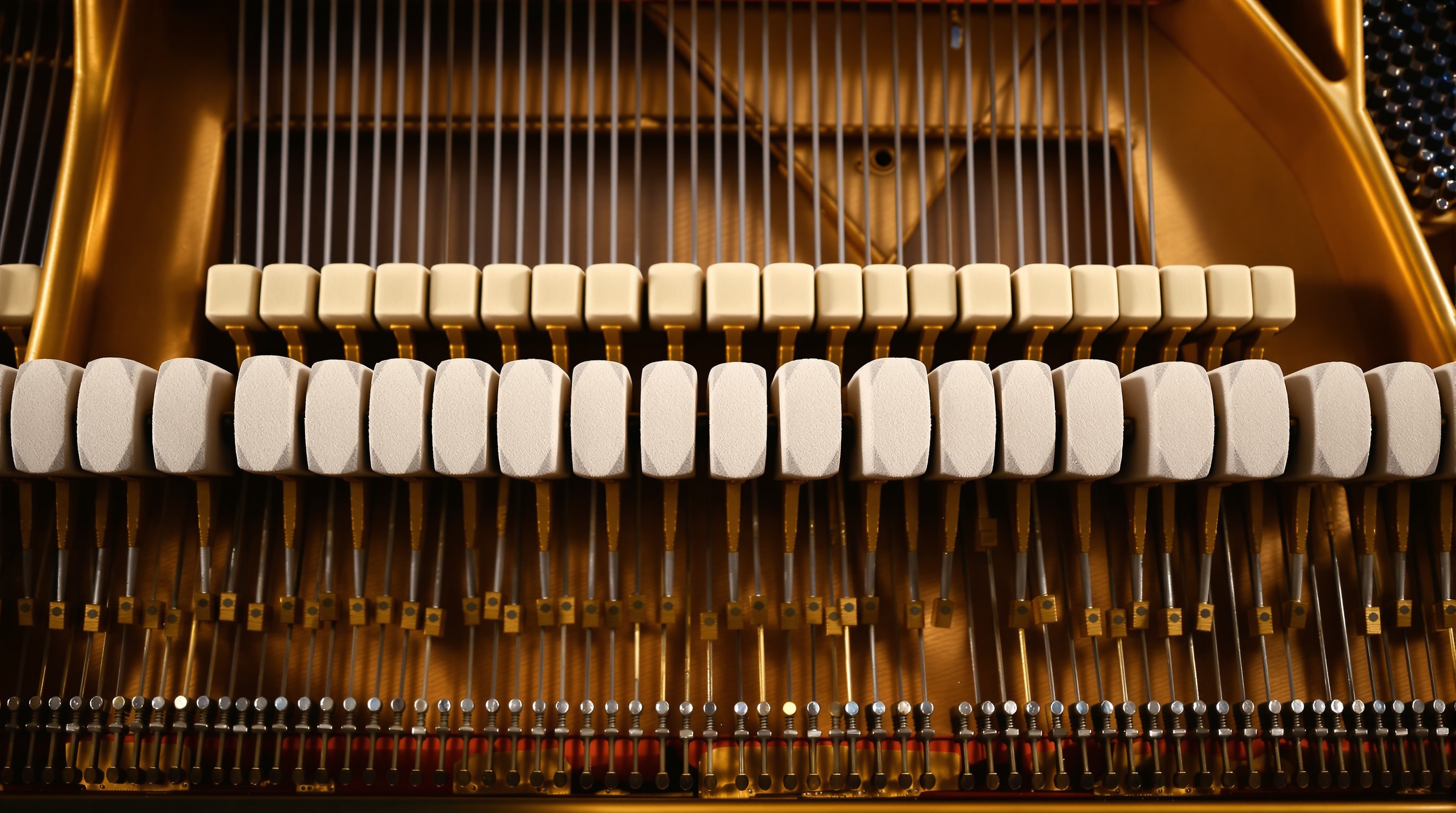
A piano can seem like a mysterious black box, but its major components are understandable, and knowing them helps you care for the instrument and talk with a technician. At its core, a piano is a machine for turning the press of a key into a precisely controlled hammer blow against a tuned steel string, amplified by a resonant wooden board. Here are the parts that make that happen.
The Soundboard
The soundboard is a large, thin panel of spruce that sits beneath (in a grand) or behind (in an upright) the strings. Its job is amplification: the strings alone are too quiet to hear well, so their vibration is transferred through wooden bridges to the soundboard, which vibrates a much larger area of air and gives the piano its volume and warmth. Because it is wood, the soundboard reacts strongly to humidity — the reason climate control matters so much, as we cover in our humidity guide.
Strings, Bridges, and the Plate
A full piano carries roughly 230 strings. The lowest notes use one or two thick, copper-wound strings; the rest use two or three plain steel strings per note. Together they pull with a tension of many tons, which is why every piano contains a massive cast-iron plate (also called the frame or harp) to bear the load. The strings pass over hardwood bridges that transmit their vibration to the soundboard. This whole assembly — strings, bridges, plate, and soundboard — is the piano's acoustic engine.
The Pinblock and Tuning Pins
Each string is wound around a tuning pin, and all the tuning pins are anchored in the pinblock, a dense, laminated block of hardwood hidden beneath the plate. The pinblock's grip on the pins is what allows a piano to hold its tune: the technician turns each pin a hair to set string tension, and the pinblock must hold that setting against tons of pull. A worn pinblock that no longer grips well is a serious problem — it's one of the key things a technician checks when inspecting a used piano.
The Action: A Small Machine per Key
The action is the marvel of the instrument — an intricate mechanism, one per key, with thousands of parts in total. When you press a key, a chain of levers accelerates a felt-covered hammer toward the strings, then lets it fall away instantly so it doesn't damp the sound (a mechanism called escapement). At the same time, a damper lifts off the strings to let them ring and drops back when you release the key. The pedals modify this behavior — the right pedal lifts all the dampers to sustain notes, the left changes the tone or volume.
The precision of this mechanism is why regulation exists: keeping all those parts in their exact geometry so the keys feel even and responsive. Our maintenance guide explains regulation and voicing in more detail.
Keys and Case
The keys themselves are wooden levers, weighted and balanced, topped with the white and black surfaces you touch. Modern keytops are durable plastics; older instruments used ivory and ebony. Surrounding everything is the case — the visible cabinet — along with the lid, music desk, and fallboard that covers the keys. The case is more than furniture: on a grand, the raised lid also reflects sound out toward the listener.
How It All Works Together
Press a key, and the action hurls a hammer at two or three tuned strings; the strings vibrate, the bridges carry that energy to the soundboard, and the soundboard fills the room with sound — all in a few thousandths of a second, and all repeatable up to many times per second under a skilled player's hands. Understanding this chain makes the various kinds of piano care make sense: tuning sets the strings, regulation tunes the action, voicing shapes the hammers, and humidity control protects the wood. For a broader look at the instrument's history and construction, the Encyclopaedia Britannica entry on the piano is a useful reference. To hear how the strings themselves are brought into agreement, read how piano tuning works.