Types of Pianos: Grand, Upright, and Digital
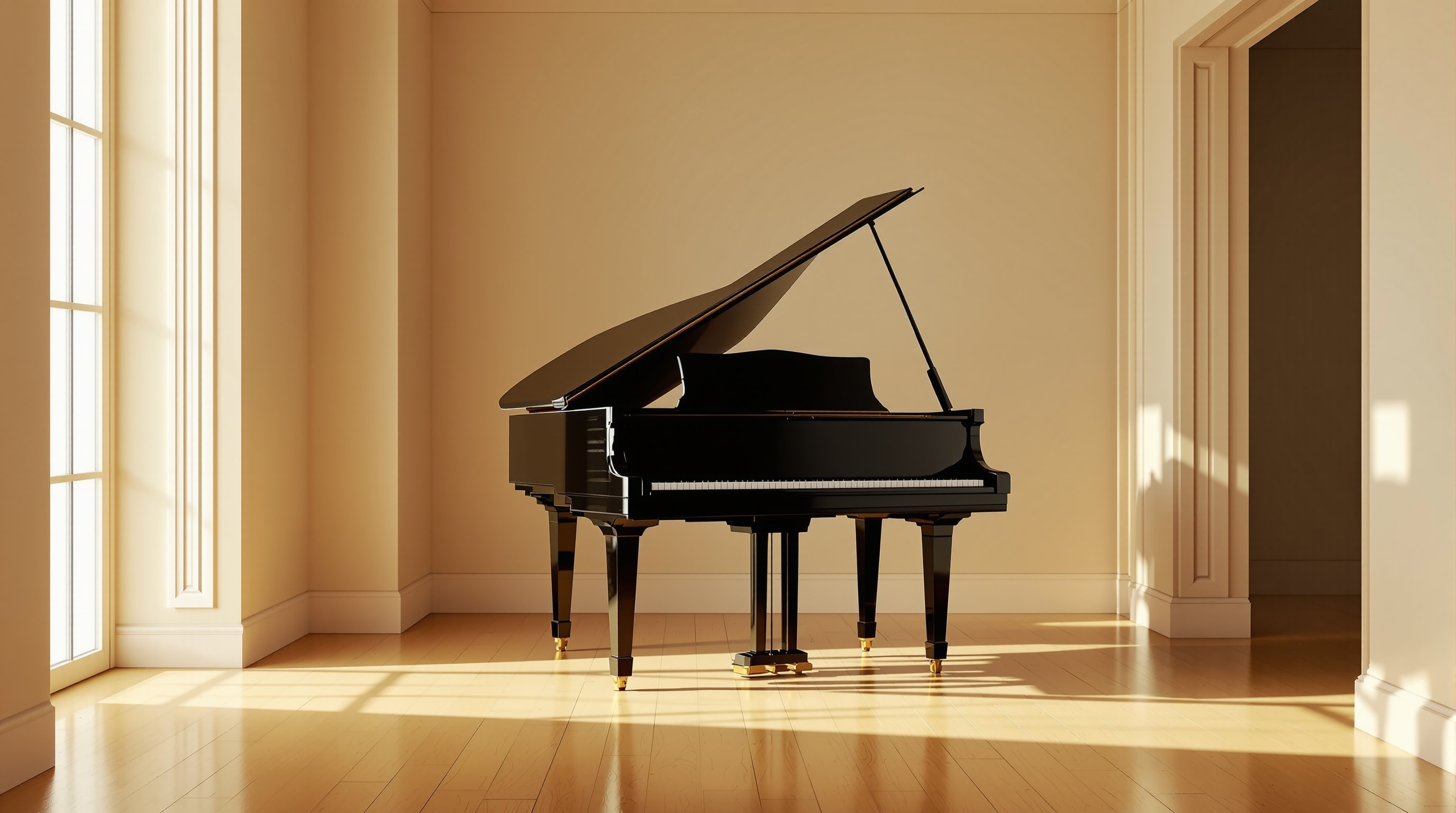
"Piano" covers a surprisingly wide range of instruments, from a compact digital keyboard to a nine-foot concert grand. Each type has its own strengths, and the right choice depends on your space, budget, playing goals, and how much care you want to take on. Independent guides such as Piano Buyer compare these instrument families in depth. Here's how the main families compare.
Grand Pianos
In a grand piano, the strings and soundboard lie horizontally and the lid opens upward. This layout is the acoustic ideal: gravity helps the action reset, giving the fastest and most nuanced touch, and the horizontal soundboard projects sound beautifully. Grands range from compact "baby grands" around five feet long to concert grands of nine feet. Longer instruments have longer bass strings and larger soundboards, which generally means richer tone and better tuning stability — at the cost of price and floor space. For serious players and performance settings, a grand is the benchmark.
Upright (Vertical) Pianos
An upright or vertical piano stands the strings and soundboard vertically so the instrument fits against a wall. Uprights range from small spinets and consoles to tall studio and full-size upright models. They deliver genuine acoustic sound and touch in a fraction of the footprint of a grand, which makes them the practical choice for most homes, schools, and studios. Taller uprights, with their longer strings and bigger soundboards, tend to sound fuller than the shortest models. A quality upright, well maintained, is a wonderful instrument that can last generations.
Digital Pianos
A digital piano produces sound electronically — usually from recordings of real pianos — played through speakers or headphones. The best digitals have weighted, hammer-style keys that imitate acoustic touch and can be genuinely satisfying to play. Their advantages are obvious: they never need tuning, they can be silenced with headphones, they don't care about humidity, and they're comparatively affordable and portable.
The trade-offs are equally real. A digital piano's sound and touch, however good, are simulations; it won't fully match the resonance and responsiveness of a fine acoustic instrument, and it doesn't carry the longevity or heirloom value of well-built wood and steel. For many beginners, apartment dwellers, and late-night practicers, though, a digital is exactly the right tool.
Which Is Right for You?
A few guiding questions help narrow the choice:
- Space: Do you have room (and floor structure) for a grand, or does a piano need to sit against a wall? Uprights and digitals fit tight spaces best.
- Sound goals: Are you after the fullest acoustic tone and touch, or is a convincing simulation enough for your needs?
- Maintenance: Acoustic pianos need tuning and climate control; digitals need neither. Consider how much upkeep you want.
- Budget and longevity: A quality acoustic piano is a long-term investment that can outlive its owner; a digital is more affordable but has a shorter useful life.
- Noise: If quiet practice matters, a digital with headphones is unbeatable.
Caring for Whatever You Choose
If you choose an acoustic grand or upright, the guidance across this site applies: a sensible tuning schedule, attentive humidity control, and periodic maintenance will keep it singing. If you choose a digital, you're spared tuning and climate worries — just keep it clean and dust-free. Either way, understanding how a piano is built deepens your appreciation of the instrument under your hands.